
A Beginner Guide to Understanding Science and Scientific Research
How to get the reliable scientific knowledge directly from the source

We live in a world where we get flooded with information.
Whether it’s the news, books, or social media, information is abundant.
But just because you read something doesn’t mean it is true. There is a lot of misinformation, or information that is misunderstood and then spread across the world. If you have ever played the Telephone game (where you whisper sentences into someone else’s ear and they need to repeat it to the next person), you know that the more people the information goes through, the more diluted it becomes.
Especially when it comes to mental health and neuroscience this is dangerous. Get the wrong information, and you might do something that hurts your mental health. Or you spend much time doing something that doesn’t help you at all.
Thankfully, we can get information directly from the source. The researchers in the field who conduct trials and get data. Who follow strict rules and protocols to make sure the knowledge they deliver is accurate.
Much of the scientific research is publicly available. The problem is: Research is hard to understand, overwhelming you with information, and you likely never learned how to process all of that.
So I am going to do a public service and share my knowledge about science and research from studying science at a university, reading hundreds of papers, and writing some myself to get my degree.
1. Science Doesn’t Know Anything
Yes, that’s an actual statement. And every good researcher will agree with it.
It’s like an initiation ritual. You are ready to be a scientist once you are ok with the fact that you’ll never know anything to be true.
‘What the hell?! Then what is the point of science??’
The world is incredibly complex. Objective truth is like the holy grail. Every scientist looks for it, but it is never to be found. All we can do is get closer to it every day.
Let’s take a simple example: You want to understand if drinking lemon juice improves your concentration.
You could do a self-test. Before you start working, you drink a glass of lemon juice. Then you measure how efficient you are. This might be enough to convince you to become a lemon juice addict. But show this to a scientist, and they’ll throw everything out of the window.
To make something as simple as the influence of lemon juice on your concentration a publicly recognized fact, you’d have to go on a long journey.
2. When Life Gives You Lemons
You are probably still wondering why you can’t just prove by yourself that lemon juice works.
Try to flip a coin 10 times. What are you expecting the results to be?
We know that it should be about 50% heads and 50% tails. But in reality, you can get heads or tails 10 times in a row. Does that mean a coin doesn’t have a 50% chance to roll either? No, but you also can’t prove that it does.
This is called variance. And it is the biggest bane of scientists. They will wake up at night, drenched in sweat after having a nightmare about how variance ruined their clinical trial.
The more variance you have, the less reliable your results become. So to reduce your variance, you need to flip more coins. Flip it 100 times, and you will gain results closer to a 50% spread on each side. Flip it 1000 times, and you are almost at a clean 50/50.
So what does this mean for our lemon experiment?
In order to prove that lemon juice increases your concentration, we’d have to isolate it from every other possibility. Think about what can affect your concentration:
Your intelligence
Whether you have ADHD
How well you slept tonight
Your mood
How stressed you are
Whether you are calm or feeling rushed
The list goes on and on. And each of those points resembles variance in your results. Maybe lemon juice improves your concentration, but you were so tired that you offset the effect. Trying to eliminate most of those factors is like finding the holy grail - not going to happen. So what can you do?
You flip find more people.
Get 100 people into a room and let them repeat the same exercise. While every person is still different, the sheer number of people will even out the variance.
But you are still not done. Now you need to divide those people randomly into 2 groups.
One group is your trial group that drinks lemon juice before doing the exercise.
The other group is your control group. They will drink water or nothing at all. You need to decide on one option for the entire group (picking either of those will still introduce variance, because water or hydration in general affects concentration, yes science is really hard)
Now you can commence the experiment. You will get 2 different data sets and can compare how each of those groups performed. If you see that the trial group performed slightly better than the control group - congratulations! You might be onto something.
But the journey is far from over. You are the pioneer, you are the first to ever test the effect of lemon juice. Now other scientists will look at your study like ravenous beasts. They will check every little detail, every typo you made, and see if it makes sense. If you passed the test - now you are peer-reviewed. As in your study is scientifically sound and accepted.
Over time, more scientists could get interested in this topic. They might test how other beverages affect concentration - orange juice, Coca-Cola, gin tonic (that one probably won’t get approved by the ethics commission).
Or they will replicate your study. Gather more people, give them a different exercise, etc. The more studies about your topic, you can probably guess by now, the less variance you will have. Eventually, scientists will look at all the results of the research and write a meta-analysis about it. These are awesome places to start understanding a topic because they summarize all the findings, look for commonalities that keep showing up, and point out what is still missing.
If the data looks promising, scientists might form a consensus about your lemon juice hypothesis. Since we have enough data, and no data that disproves your claim - it will become a scientific fact. Now you can finally tell your friends and family you solved the lemon juice mystery.
But since we can never eliminate variance and the human brain isn’t capable of understanding all the possible variables to begin with - this is simply a temporary truth. We will never know for sure, but we are as close as we can get until someone proves the opposite.
Now that you know how much work goes into scientific papers before they even reach the public, let’s look into how you can make use of them to learn about science.
3. The ‘Not So Holy’ Grail of Information
As I mentioned above, there are different kinds of scientific studies. The papers you see can all have different goals and processes.
The most common is a trial study: They’d make assumptions and try to prove them in a setting similar to our lemon example. In neuroscience, this often involves brain scans so we can see what actually happens in the brain (very fascinating!)
Then we can have studies that use our existing knowledge and either compile it or use it to construct a new idea, framework, model, etc. While they don’t gather new data through trials, they help us make sense of the vast research that is out there.
I will use one such study to show you how scientific papers work, how to read them, and how to trust their information.
The paper (Link) I am showcasing is about rumination (having repetitive negative thoughts about ourselves and our actions). It compiles decades of research on the topic, talks in depth about why rumination occurs, how it interferes with our lives and mental health treatment, and then proposes a model to help understand the topic.
Even though scientific papers can be vastly different, they all need to follow a standardised structure. Once you understand that structure, you know what to look out for in a paper. So let’s get into it.
The Abstract
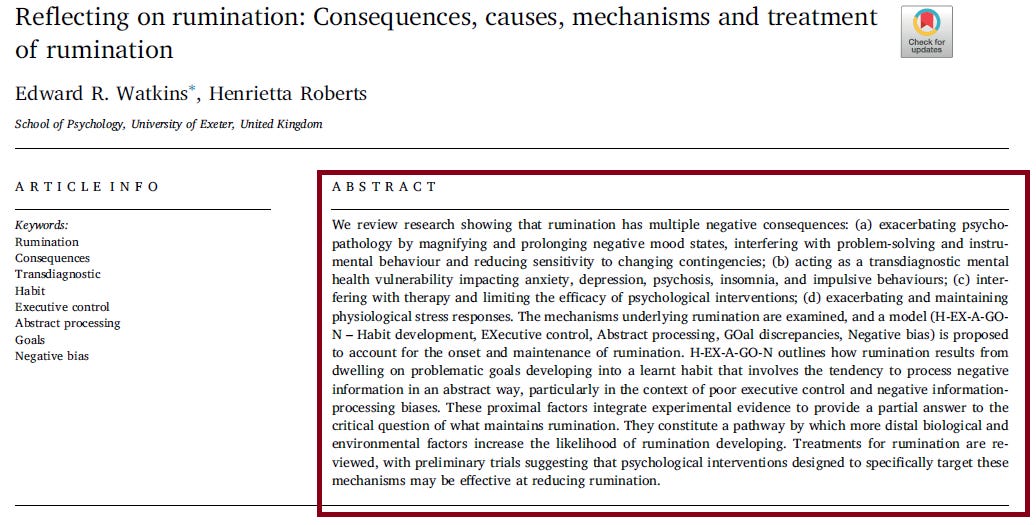
Every paper has an abstract. It’s a short summary of:
The topic being talked about
The goal of the paper
The process of how they get to their goal
The results that they found
When you are looking for research, abstracts are the fastest way of figuring out if the paper is what you are looking for. It will give you a basic idea of what you will read going forward, and abstracts are always posted on the site that is hosting the paper (even if the paper is paywalled)
Introduction and Current State of Research
After the abstract, the paper will go into depth about the topic, the goal, and the process of getting there. You will usually find definitions and longer explanations about why this problem is important to solve.
But before any new information can be shown, it is the duty of every study to summarize the previous research done on the topic. This is a great way for you to catch up without having to read all the research yourself.
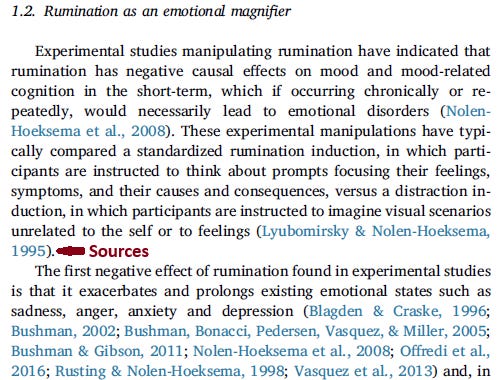
For every bit of information taken from other research papers, they need to provide the source (Always the name of the researchers and the year it was published). This is due diligence and allows you to check information yourself or find more papers to dive deeper into. Most papers allow you to click on the source and it will send you to the part of the document with the full source and the link.
If you are intimidated by the language, that is normal. Especially in neuroscience, it can become hard to read with all those complex terms. Treat it like learning a new language. Take your time, look up words. You don’t need to understand every single word as long as you get an idea about what you are reading. Yes, even I am still struggling sometimes.
Pro Tip: If you are completely overwhelmed go to https://www.perplexity.ai/
Download the paper as a PDF → Attach the paper to your search qeuery → Ask the AI to summarize this paper for someone who doesn’t know anything about neuroscience
It will then give you a very simple explanation of the study and you can keep asking the AI questions about the paper. It’s not 100% reliable but better than nothing.
The Main Part
The main part of the paper is always different depending on the type of study it is. If there was an experimental trial conducted, you would get all the information about it (how they selected participants, how they tested them, how they measured the results, etc). These can get quite complicated. Researchers are required to explain everything in detail so that other researchers can replicate a study. I usually skim this part, so it is fine if you skip it.
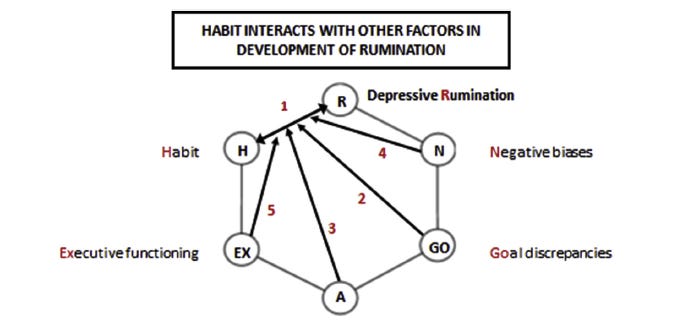
In our example study, this is where they introduce the H-EX-A-GO-N model as a way to make the topic of rumination easier to understand. They tie in the previous research with their own understanding and explain how the model works and how to use it. As with everything in science, this model is a proposition. A way to think differently about a topic. Not the truth, nor the only way you can approach it.
And if you aren’t interested in the model, you could simply read the state of the research and move on and you have already gotten a lot of value out of the paper.
The Closing Part
This part is especially important if you are reading newly released research. It will talk about the limitations of the study, aspects they couldn’t cover or weren’t able to explain. They will make a call for further research to cover those aspects to get a complete understanding.
It will also often include a discussion - where researchers bring in their own perspective to make sense of the state of the research or what they just found out. These are useful to read if you want to get a deeper understanding of a topic.
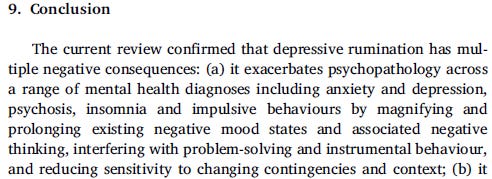
Then every paper has a conclusion. A summary of the results. They provide great takeaways, and if you didn’t want to read the full study, you usually get enough of an understanding by just reading this part.
Afterward, you will always find a gigantic list of references. It’s the collection of all the material and information cited in the study. If you want to look something up, double-check the findings, or dive deeper into a part of the topic, this is the place to go.
That sums up how you can read scientific papers to get first-hand information about topics you are interested in.
Now to complete this guide, I want to cover some of the questions you might still have, such as: ‘Where do I find papers to read?’ and ‘Can I trust the information?’
4. Where to get Trustworthy Research
There are a lot of places where you can find research. Most researchers publish their work in publications.
For example, the study we just looked at was published in a journal called ‘Behavior Research and Therapy’
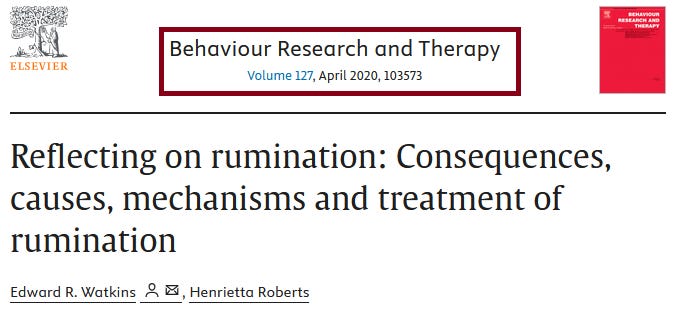
Whenever you have a paper, you can check where it was published. If it was published in a journal you can generally trust it since it went through a peer-review process. The publication behind this journal is called ‘ScienceDirect.’ They have their own website where you can even read about how they conduct the peer reviewing process.
To get psychology and neuroscience research in the first place, I would recommend using
PubMed Central - by the National Center for Biotechnology Information (an official US government institution)
You can simply enter your search terms, and it will give you a gigantic library of research that is generally free to access and trustworthy.
Google Scholar - has the entire Google search engine behind it to find the right papers for you.

For our example paper, it looks like this. The great thing about using Google Scholar is that it shows you how often the paper was cited. This paper has been used in over 1000 other publications within 5 years of its existence, which makes it very credible.
If you click on the main link, you will be sent to the host ScienceDirect. While the host has this article paywalled, you can still get access to it freely.

Google will automatically look for other hosts of this paper, and if it finds one that is freely accessible, you can immediately get the entire paper without paying anything. Amazing, isn’t it?
Alright, it feels like my fingers are going numb, so I am going to call it here. I hope this gives you a good understanding about how researchers conduct their work and how you can get access to that knowledge.
If something is unclear or you have more questions, let me know. I’ll answer anything I can.
If you found this guide useful, share it with others so they can learn how science works and how to read the research!
Enjoy the world of science :)
You got this!
~ Felix
Want to read more neuroscience? Here is one of my deep dives about motivation and why it never seems to last:
